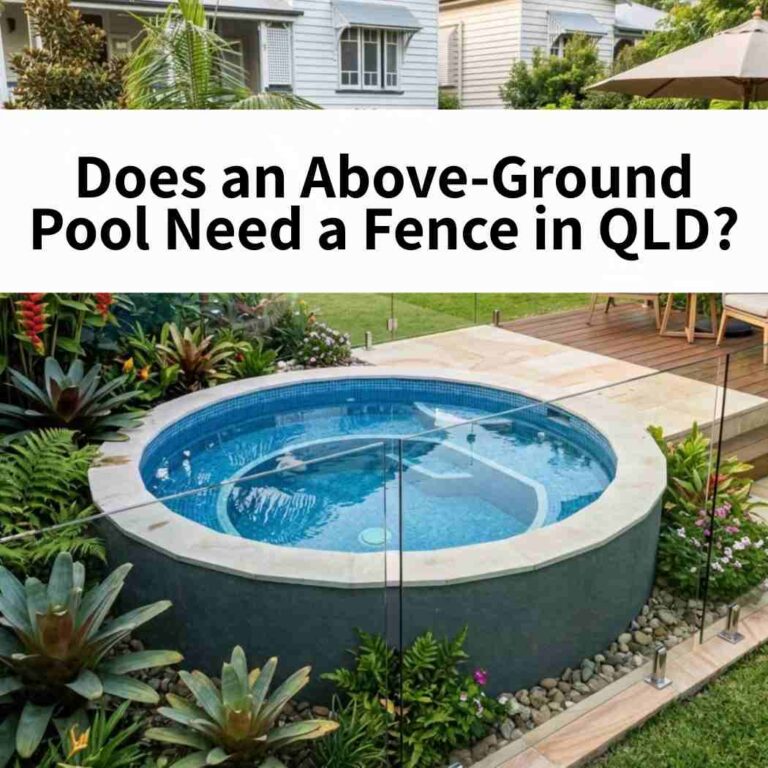
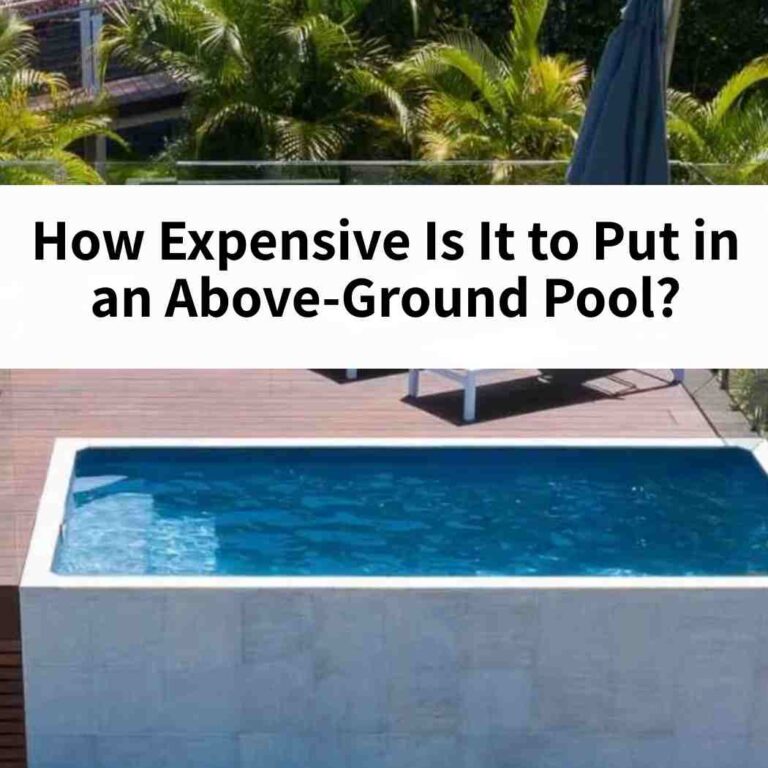
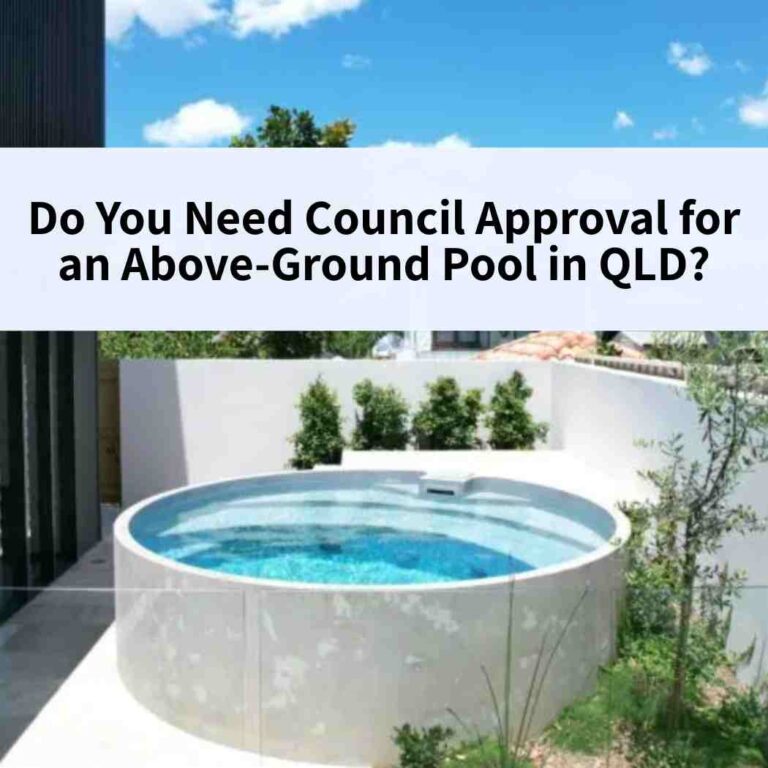
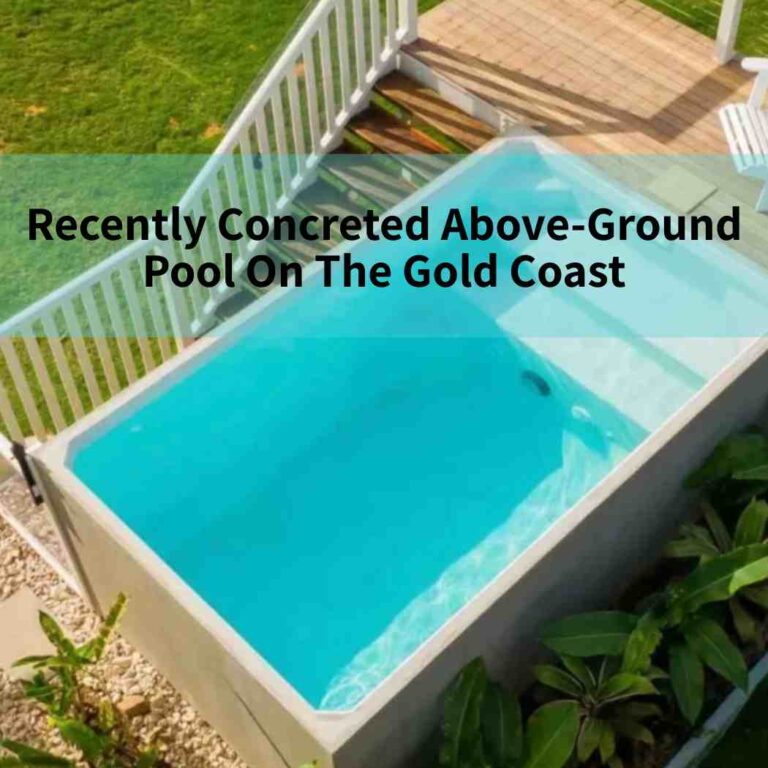
At Plunge Pools Gold Coast, we build and inspect luxury concrete and infinity-edge pools. We follow engineering standards, AS 1926.1, and strict quality assurance steps to protect homeowners from common defects. Every pool project is approached with precision so the owner receives a long-lasting structure that suits their property and vision.
This guide explains the key checks, certificates, tests and warning signs to review before handover. By the end, you’ll know how to protect your pool, your home and your investment with proper maintenance, smart decisions and full awareness of how cost and performance connect to long-term success.
How Infinity Edge Systems Work

An infinity edge pool works by allowing water to flow over one side of the pool to create the “vanishing horizon” effect. It feels like the pool blends into the view, but the effect comes from a smart hydraulic system working quietly in the background.
This illusion relies on control, accuracy and attention to detail, giving your pool long-term value and consistent visual impact, no matter the type of design you choose, especially when paired with a custom layout tailored to your site.
1. The Lowered Infinity Edge
One side of the pool is built slightly lower than the others. When the pool is filled, water gently spills over this edge in a smooth, even sheet.
2. The Catch Basin (Small Hidden Pool Below)
Under the overflow edge is a smaller pool called a catch basin or surge tank. It collects all the water that spills over, so nothing is wasted.
3. Pump That Sends Water Back Up
A dedicated pump draws water from the catch basin and returns it to the main pool. This creates a continuous loop, keeping the overflow effect running all day.
4. Automatic Water Level Sensors
Infinity pools must stay at the perfect height. Automatic sensors add water when needed to keep the level even with the infinity edge. If the water drops even a little, the effect stops, so these sensors do the work for you.
5. The Result: A Mirror-Like Edge
When everything is set up correctly, the edge looks:
- smooth and calm
- reflective and mirror-like
- blended into the landscape
- like it’s flowing over the horizon
This calm, reflective edge is also what supports the everyday wellness and visual benefits of infinity edge pools, making precision workmanship essential to preserve the experience.
Why QA Matters for Infinity Edge Pools
Quality Assurance (QA) matters for infinity edge pools because even small construction or hydraulic errors can cause uneven water flow, leaks, pump strain and long-term structural issues. QA checks confirm the pool is safe, watertight and performing exactly as designed from every angle.
What QA Helps Prevent
- Uneven water flow – Even a tiny height difference can make the edge look patchy.
- Leaks or cracks – Poor concrete work or weak waterproofing can lead to major repairs later.
- Pump and system strain – Incorrect hydraulics can cause the pump to run dry or work too hard.
- Safety issues – QA checks that fencing, structure and electrics meet all requirements.
Why It Matters for You
QA protects your pool’s appearance, performance and long-term durability. It stops problems before they happen and makes sure your investment is safe, stable and ready to enjoy.
What Mandatory Compliance Certificates Must Be Provided At Handover?
You must receive a comprehensive set of certificates that prove your pool was built safely and correctly. These documents protect you from hidden problems later.
What you must receive:
- Form 21: Confirms the whole job passes final inspection.
- Pool Safety Certificate: Proves your fence and gate meet safety laws.
- Form 15 & 16: Engineering approval for the design and final build.
- Waterproofing Certificate: Shows the pool shell and catch basin are properly sealed.
- Hydraulic Compliance: Confirms that the pumps and water flow work correctly.
Why it matters
These certificates protect you, help with resale, support warranties and ensure your pool is legally compliant. Keep digital and printed copies of everything.
What Builder Delivered Documents Must Be Handed Over When The Pool Is Completed?
When your pool is finished, your builder must give you all the important documents that explain how the pool was built and how to look after it.
You should receive:
- As-built drawings: The final plans showing exactly how your pool was built.
- Underground services map: A diagram showing where pipes and electrical lines run.
- QA photos: Pictures taken during key construction stages.
- Warranty papers: For pumps, filters, heaters, lights and other equipment.
- Operation manuals: Guides for using and maintaining your pool and equipment.
- Optional handover video: A helpful walkthrough showing how everything works.
Why this matters
These documents protect your warranties, help future tradespeople and make it easier to care for your pool.
Infinity Edge QA Checklist
1. Catch Basin and Surge Tank QA
The catch basin (also called a surge tank) is the engine of the infinity edge system. It manages water overflow, stores displaced water from swimming activity, and keeps the “vanishing edge” effect continuous.
A proper QA inspection should confirm:
Capacity & Engineering
- Surge tank must hold one-third of the main pool’s total volume to prevent pump starvation or excessive cycling.
- Engineering drawings should match the as-built construction.
Waterproofing Integrity
- The membrane must show no cracks, damp spots, blistering, or weak adhesion.
- Internal corners and penetrations must be fully sealed.
Sensor & Float Switch Function
- Automatic water-level sensors must respond quickly to changes.
- Float switches in the surge tank should rise and fall smoothly without getting stuck.
Pump & Recirculation Performance
- Pumps must prime quickly, run quietly, and show no vibration.
- Return flow must match the hydraulic design to maintain a smooth, even sheet of water over the edge.
2. Overflow Weir QA
The overflow weir is what creates the iconic “infinite horizon.” Any defect here can disrupt the illusion or cause turbulence, leaks, or misalignment.
Precision Alignment
- Weir height must be consistent within 2–3 mm across the entire length.
- Any variation causes dry patches or noisy flow.
Tile & Grout Finish
- Tiles must sit perfectly straight.
- Grout lines are smooth and evenly spaced.
- No pinholes, shading issues, or loose tiles.
Waterfall Performance
- Water should flow evenly across the entire edge, forming a smooth curtain.
- No dry spots, ripples, or diagonal flow.
Structural and Waterproofing Reinforcement
- The weir wall must be fully waterproofed from behind.
- Reinforcement steel must match the engineer’s plans.
3. Hydraulic System QA
Infinity edge pools depend on hydraulic precision to keep the water level stable.
Flow Rate Testing
- Pumps should deliver exact flow rates specified in the hydraulic design.
- Incorrect flow creates turbulence or overflow.
Automatic Water Levelling
- Auto-leveller must refill the system to the correct height and shut off properly.
- Ensure low-water protection is active.
Valve Testing
- All valves must be leak-free and operate smoothly.
- Ball valves and check valves should engage without delay.
Balance Line Pressure
The balance line must hold pressure during:
- Wind
- Splash activity
- Heavy swimming loads
Pressure drops indicate leaks or poor installation.
4. Drainage & Overflow QA
Poor drainage can cause waterproofing failures, structural damage, and long-term moisture problems.
Drainage Performance
- All grates must be clean, aligned, and set at the correct height.
- Water should not pool around the catch basin or equipment.
Stormwater Diversion
- External rainwater must never enter the surge tank.
- Stormwater pipes must be correctly connected and sealed.
5. Tiles, Coping & Finish QA
Infinity edge finishes must be flawless because imperfections are magnified by moving water, especially when reflections bounce off nearby glass surfaces around the pool area.
Tile Integrity
- No hollow tiles, loose edges, or weak grout joints.
- The tile surface is smooth and safe to walk on.
Coping Alignment
- Coping should be perfectly straight along the edge.
- Check mitred corners for accuracy.
Surface Protection
- Temporary construction protection (e.g., Goop) should be applied during the build to prevent stains or scratches.
6. Automation, Electrical & Lighting QA
Infinity pools often include high-tech systems. All electrical work must be tested thoroughly.
Lighting QA
- LED pool lights must be bright, waterproof, and evenly illuminated.
- Check for flickering or water intrusion.
Safety Compliance
- Earth bonding installed.
- RCD protection fitted and tested.
- All equipment must comply with electrical standards.
Automation Testing
- Wi-Fi/Bluetooth controllers must connect reliably.
- Timers, heaters, and smart features must operate through full cycles.
Structural QA Before Handover: Complete Owner’s Guide
1. Concrete and Reinforcement QA
Concrete quality is one of the most important factors in the long-term performance of an infinity edge pool. The structural shell must be strong enough to handle hydrostatic loads, vanishing edge pressure, and environmental expansion and contraction.
Slump Testing
- Concrete slump should be between 2.5–7.5 cm.
- Ensures balance between workability and strength.
- Too wet = weak concrete.
- Too stiff = improper compaction.
Pour Temperature
- Must be poured at under 32°C.
- High temperatures cause rapid water evaporation, weak bonding, and shrinkage cracks.
Curing Requirements
- Concrete should cure for 7–14 days.
- Prevents early cracking and improves long-term durability.
- Shaded or wet curing improves hydration and reduces internal stress.
Reinforcement Placement
- Steel reinforcement must meet the engineer’s cover depth requirements (distance between steel and outer concrete).
- Correct cover depth prevents corrosion and ensures proper structural performance.
Pour Height
- The pour height must be under 1.5 metres to avoid “honeycombing” or weak, segregated concrete.
- Low-height pours ensure consistent compaction and structural integrity.
2. Waterproofing QA
Infinity edge systems are more vulnerable to water loss because the catch basin and wet-edge wall experience constant water pressure. Waterproofing must be flawless.
Correct Membrane Type
- Builders should use cementitious or epoxy membranes designed for submerged structures.
- Must comply with manufacturer specifications and engineering recommendations.
Uniform Application
Waterproofing must show even coverage with no:
- Thin spots
- Pinholes
- Missed corners
- Weak adhesion
Extended Waterproofing System
Waterproofing must extend continuously through:
- Main pool shell
- Infinity edge wall
- Surge tank/catch basin
Prevents leaks that may cause soil erosion, structural movement, or pump failure.
3. Settlement and Ground Movement QA
Because infinity edges rely on perfect alignment, even slight ground movement can disrupt the vanishing edge effect.
Compacted Soil or Base
- Soil must be properly compacted to prevent settlement under weight.
- Compaction testing may be required on sloped or reactive sites.
Evidence of Movement
Inspect surrounding retaining walls or support structures for:
- Leaning
- Bowing
- Cracks
Any movement can transfer force to the pool shell.
Rechecking Edge Level
- The infinity edge line must be re-verified at handover.
- Even 2–3 mm of movement changes the water sheet, causing dry patches or noisy spillover.
General Pool Quality Checks That Still Matter for Infinity Edges
1. Pool Shell QA (Structural & Surface Integrity)
The pool shell is the foundation of the entire structure. Any imperfections, cracks or movement can lead to leaks, tile failure or long-term structural repairs.
What to Check:
No visible cracks in the concrete, especially around:
- Corners
- Steps
- Weir wall
- No efflorescence (white salt residue), which indicates moisture migration.
- Tiles must be firm and securely adhered with no hollow sound when tapped.
- Coping must be flat, level and securely installed, with tight joins and no rocking.
These checks confirm the shell has been constructed and waterproofed correctly.
2. Equipment QA (Mechanical & Hydraulic Systems)
Every piece of equipment must be running smoothly and efficiently to maintain water quality, circulation and heating.
What to Check:
Pumps
- Must run quietly without rattling, vibration or cavitation.
Should prime quickly and maintain strong suction.
Filters
- Cartridge or sand filters should be tested under load.
Confirm correct pressure ranges and backwashing instructions.
Heaters
- Gas, electric or heat pump should reach the target temperature.
No error codes or cycling issues.
Chlorinators / Sanitising Systems
- Saltwater chlorinator or dosing system must be calibrated.
- Confirm cell operation and output level.
Operational Training You Should Receive:
- How to backwash the filter.
- How to reset the pump and chlorinator.
- How to switch between manual and automatic modes.
- Basic troubleshooting to avoid unnecessary service calls.
3. Water Quality QA (Balanced Water Chemistry)
Balanced water chemistry protects the shell, equipment and swimmers. Incorrect levels can cause corrosion, algae growth, cloudy water or surface damage.
Target Levels:
- pH: 7.0 – 7.8
Maintains swimmer comfort and equipment protection. - Chlorine: 1 – 3 ppm
Ensures sanitisation without eye or skin irritation. - Calcium Hardness: 150 – 400 ppm
Prevents etching, scaling or cloudy water. - Total Alkalinity: 80 – 120 ppm
Helps stabilise pH and maintain a consistent water balance.
Confirm these readings on handover day with a photometer or test strips.
4. Safety Compliance (AS 1926.1 Requirements)
Under Australian Standard AS 1926.1, every pool must meet strict safety requirements before it can be legally used. These rules exist to protect children and ensure safe access around the pool area.
Key Safety Requirements:
- Self-closing gate must latch automatically from any open position.
- Latch height must meet the minimum standard height (typically 1500 mm).
- The pool fence must be clear of climbable objects such as:
- Furniture
- Trees
- Planter boxes
- Ledges
- CPR sign must be displayed clearly and permanently.
- A compliance plate must be installed on the pool shell or near equipment as required by your state or territory.
Safety checks must be completed before any swimming takes place.
Top 9 Common Defects in Infinity Edge Pools (Defect Prevention & Handover QA for Infinity Edges)
- The basin leaks from weak waterproofing.
- Uneven overflow from poor weir alignment.
- Pump cavitation due to low water levels.
- Calcium build-up on exposed tiles.
- Noisy or vibrating pumps from air leaks.
- Light moisture ingress is causing flicker.
- Overflow channel blockages from debris.
- Small surge tanks leading to overspill.
- Cracks from poor curing or mix errors.
Many of these issues emerge gradually, which is why reviewing what infinity edge pool owners experience during the first year helps detect problems early.
Builder QA Steps (What a Good Builder Should Do)
A reputable builder follows a strict QA process during every construction phase. These steps ensure structural integrity, waterproofing performance, and accurate hydraulic design. Before handover, homeowners should ask for clear proof that these quality checks were completed.
Key QA Deliverables You Should Request:
Engineer Inspections and Sign-Offs
- Structural engineer inspection for steel fixing, reinforcement spacing, formwork, and shell stability.
- Hydraulic engineer confirmation of flow rates, pipe diameters, surge capacity and balance line performance.
- Waterproofing specialist certification for cementitious or epoxy membranes.
Hydraulic Test Records
- Documentation showing successful pressure testing of pipes, valves, and balance lines.
- Flow rate measurements confirming the pump and weir match design requirements.
- Auto-leveller performance logs.
Photo Evidence of QA Stages
Ask for photos that prove:
- Steel reinforcement placement before concrete pour.
- Waterproofing layers and corners.
- Protection layers applied before tiling.
- Tile alignment, grout depth, and edge preparation.
This documentation protects you from hidden workmanship issues that may appear months later.
2. On-Site Tests Before Handover (Critical Performance Tests)
These tests confirm that the infinity edge system works under real conditions and that every component is calibrated correctly.
Flow Test
- Ensures smooth, uninterrupted water movement around the recirculation loop.
- Confirms that pumps are delivering the correct flow rate to the weir.
Weir Level Test
- Verifies that the infinity edge is perfectly level.
- Even a 2–3 mm variation creates dry spots or noisy turbulence.
Pressure Test
- Identifies leaks in pipes, fittings, and valves.
- Confirms that pressure holds steady under load.
- Prevents future bursts, leaks, and hydraulic failure.
Surge Capacity Test
Ensures the catch basin holds enough water during:
- Swimming activity
- Wind pressure
- Wave action
- Prevents pump starvation and water loss.
Tile Tap Test
- Detects hollow or poorly bonded tiles.
- Helps prevent future lifting, cracking, or water seepage.
Leveller Calibration
- Confirms that sensors detect water levels accurately.
- Ensures the auto-levelling system fills and stops at the correct point.
- Prevents overflow and surge tank flooding.
3. Red Flags: Delay Handover If You See These Problems
These signs indicate significant issues with the structure, waterproofing, hydraulics, or workmanship. If any red flags appear, do not accept the handover until the builder rectifies them.
Structural or Waterproofing Concerns
- Wet soil, damp patches, or seepage behind the catch basin.
- Cracks are forming along the weir wall or basin walls.
Hydraulic Performance Issues
- Uneven overflow or inconsistent water sheet.
- High filter pressure, pump overheating, or excessive noise.
- Slow priming or pump cavitation.
Tiling and Finish Issues
- Hollow tiles, loose edges, or lifting coping.
- Uneven grout lines or misaligned tiles.
- Stains indicate poor protection during construction.
Administrative Red Flags
- Missing Form 21 / engineering certificates.
- No hydraulic compliance paperwork.
- No waterproofing certificate.
- No as-built drawings or QA photos.
These issues suggest the builder has skipped important QA steps, and the pool may not comply with safety, engineering or performance requirements.
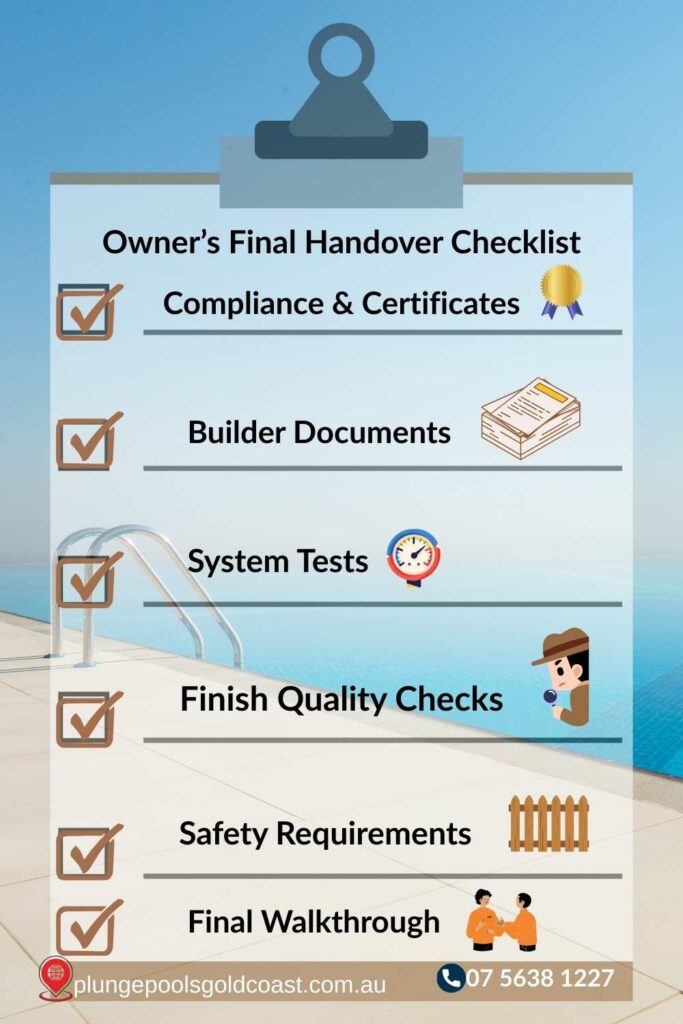
Conclusion
Infinity edge pools are beautiful systems that need careful checks before handover. With the right documents, clear tests and strong builder quality steps, you can prevent most defects before they start. When you understand how the structure, hydraulics and waterproofing should perform, you can protect your pool and enjoy a smooth, even and reliable infinity edge for many years.
If you want expert help with your infinity edge pool, reach out to Plunge Pools Gold Coast. Our team offers inspections, guidance and support so you can feel confident during handover. Contact us to book a professional check or to learn how we can help build and protect your pool investment.
FAQS
1. How can I tell if my infinity edge overflow is built to the right height
The overflow is correct when the water falls in one smooth line with no dry spots. If the edge height is even within two to three millimetres, the flow will stay clean and balanced.
2. What signs show that my catch basin or surge tank is leaking
A basin is leaking if you see damp soil, water loss or wet patches around the basin walls. These signs show that the waterproofing is weak and water is escaping behind the structure.
What do I do if the water flow across the edge is not even?
Uneven flow means the weir height is not level. Ask your builder to check the tile line, grout and edge height. Fixing the edge usually restores a clean and even sheet of water.
4. How much noise from the basin pump is normal
A short soft hum is normal. Loud grinding or vibration is not. Strong noise means air is entering the pump or the water level is too low. Fixing the water level often solves the problem.
5. When should I book a professional infinity edge inspection on the Gold Coast
Book an inspection before handover or when you notice uneven flow, leaks or pump noise. Early checks help prevent long-term damage and protect the structure of your infinity edge pool.