At Plunge Pools Gold Coast, we guide homeowners through these real-world changes so you know what’s normal and what needs attention. Our team gives clear advice, easy checks and trusted help to keep your infinity pool safe, efficient and long-lasting while ensuring the design enhances your lifestyle and property.
In this ultimate guide, you will learn the typical running costs, how the system settles, which parts need routine care and how to help your pool last longer with fewer surprises. By the end, you will have a clear picture of what year two and beyond will look like.
What Running Costs Infinity Edge Pool Owners Can Expect After Year One?
An infinity edge pool settles into a clear and predictable running pattern. The pumps, plumbing and overflow system work together in a steady cycle, creating that seamless, breathtaking spillover that many homeowners choose for both luxury and pool design appeal. This includes the dramatic infinite edge look that transforms your outdoor space.
Energy Use
Expect consistent electricity use because the edge pump must keep the water flowing over the lip. This constant movement creates the seamless “vanishing edge” look, but also uses more power than a standard pool circulation cycle.
- Main circulation pump: normal daily energy use
- Edge or “wet edge” pump: extra power to keep water spilling evenly
- Automation systems: small but steady usage
Most homeowners see a moderate increase in their electricity bill compared to a standard pool.
Water Top-Ups
Infinity edge pools lose more water through evaporation and splash over the edge.
You can expect:
- Regular top-ups from the auto-fill system
- Occasional manual top-ups in hot or windy seasons
- Higher water use than a traditional pool
This is normal because water constantly flows into the catch basin, then cycles back.
Routine Maintenance
Year two and beyond usually follow a smooth schedule:
- Check and clean the edge pump and filters
- Inspect the catch basin for leaves, bugs and debris
- Make sure water levels in both the main pool and basin stay balanced
- Keep an eye on the edge lip to ensure the water sheet is even
These small checks help prevent bigger problems like uneven overflow, pump strain or blockages and protect the long-term value of your property. If you notice uneven overflow or pump strain, reviewing defect prevention and handover QA for infinity edge pools helps you trace issues back to levelling, waterproofing, or flow-rate setup.
Chemical Use
Chemicals stay fairly stable. Because the water is always moving, chlorine and pH levels remain more even. You may use slightly more chemicals than a standard pool because of the increased water turnover.
Long-Term Wear and Tear
Once the system settles, parts such as pumps, valves and sensors follow normal life cycles.
Infinity edge pumps may need earlier servicing due to their higher workload.
Overall Running Cost Summary
Most infinity edge owners can expect costs to be:
- Slightly higher electricity use
- More frequent water top-ups
- Edge pump maintenance every 6–12 months
- Stable but slightly increased chemical use
These costs are part of how infinity edge pools create their signature luxury look and smooth, constant water movement.
Energy Use and Pump Operation After Year One
The pump becomes more stable after the first year, but it still works harder than a normal pool pump.
Infinity edge pools need steady water movement over the edge to create the waterfall effect. This means the pump runs for longer each day to keep the waterline even and clean, especially important when working with experienced technicians who understand the system’s specific flow requirements and how these choices can influence construction costs.
Energy-saving tips:
- Keep filters clean, so the pump doesn’t strain
- Use a timer for consistent cycles
- Choose energy-efficient pump models
- Check flow rates every few months
In hot Gold Coast summers, pumps run more often to manage evaporation. In cooler months, they run less. Once you know this rhythm, you can balance efficiency and performance.
How Do Infinity Pool Maintenance Costs Change After Year One?
After the first year, an infinity edge pool behaves more like a system reaching balance. The early shifts fade, and the pool settles into a stable rhythm of energy use, water flow and simple, predictable care.
Steady Pump & System Maintenance
Infinity edge pools rely on constant movement, and by year two, the system becomes steady and consistent.
You can expect:
- Routine pump checks that feel more like quiet observations than urgent tasks
- Cleaning pump baskets to keep the water flowing smoothly
- Seal inspections to prevent tiny leaks that disrupt the system’s harmony
- Weir and overflow checks to ensure the vanishing edge stays perfectly even
These are small, regular steps that help maintain the illusion of infinite water.
Predictable Water Use
Because the water must spill over the edge, infinity edge pools naturally use more water than standard designs.
By year two, the pattern becomes clear:
- Consistent top-ups that follow a familiar rhythm
- Evaporation losses are shaped by heat, sunlight and the open edge
- Minor splash-out during windy days
- Stable balance with an auto-leveller, keeping the system in equilibrium
This predictable cycle shows you exactly what ongoing water costs will be.
Stable Chemical Use
As the pool surface settles, the chemistry becomes easier to manage.
Most owners see:
- Steady chlorine levels, slightly higher than standard pools, due to constant motion
- More predictable pH behaviour, with fewer sudden changes
- Occasional checks in the catchment trough, which becomes part of the pool’s natural chemical cycle
The system becomes more like a calm equation; steady, clear, and easy to monitor.
Occasional Minor Repairs
Even well-built systems need small adjustments over time.
Typical tasks include:
- Removing debris from the trough
- Cleaning calcium from the spillway lip
- Replacing simple pump seals
- Rebalancing the waterline if the edge becomes slightly uneven
These repairs are normal, not warnings, just gentle nudges that keep everything working beautifully.
Electricity Use Levels Out
The infinity edge pump runs longer than a standard pool pump to maintain continuous flow.
After year one, this becomes stable and predictable:
- Consistent monthly energy use
- No sudden increases in power draw
- A steady pattern that mirrors the calm, ongoing movement of the edge
It becomes easy to budget because the system stops surprising you.
How Long Does a Concrete Infinity Edge Pool Last?
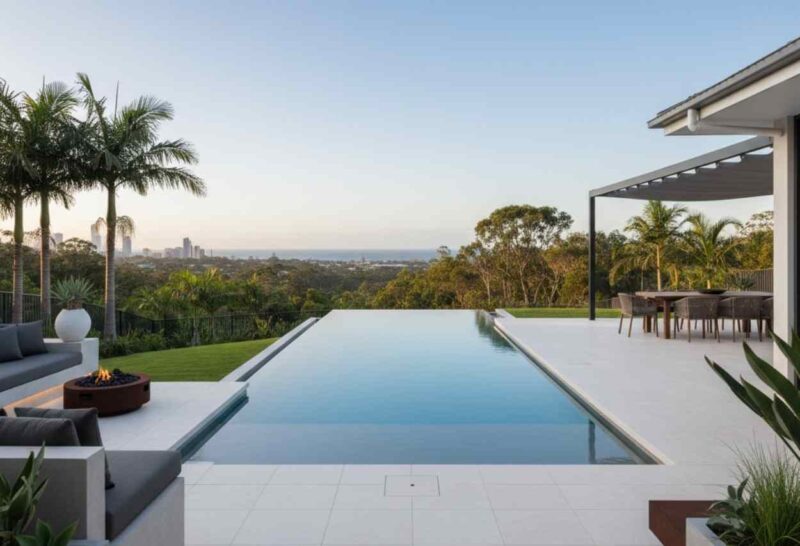
A well-built concrete infinity edge pool can last 30–50 years or more. With proper care, strong waterproofing, and a well-designed edge system, these pools stay durable, stable, and visually seamless for decades.
Typical Lifespan of a Concrete Infinity Edge Pool
Most high-quality concrete infinity edge pools last between 30 and 50 years, and many exceed this range.
Their long lifespan comes from:
- Steel-reinforced concrete shells built to handle movement and pressure
- Durable waterproofing membranes that protect against seepage
- Long-lasting hydraulic systems that support the overflow
When these elements work together, time has very little impact.
The Role of Proper Waterproofing
Waterproofing is a key factor in how long a concrete pool survives.
A strong waterproof layer ensures:
- Reduced risk of leaks, one of the most common issues in infinity edges
- Protection of the shell, stopping water from weakening the concrete
- Long-term edge stability, so the spillway stays perfectly level
When waterproofing is done correctly, it extends the pool’s lifespan significantly.
Construction Quality Determines Longevity
A concrete infinity edge pool lasts longer when built with precision.
Important construction factors include:
- Accurate edge levelling so the spillway remains even
- Balanced hydraulics to maintain constant flow
- Correct trough and pump sizing for long-term performance
- Engineered steel reinforcement for strength and stability
When each component follows engineering standards, the pool becomes a long-lasting structure.
Maintenance Over the Decades
Even strong systems need routine care to stay at peak performance.
Reliable long-term maintenance includes:
- Regular checks of the edge pump and trough
- Cleaning and managing calcium along the spillway
- Monitoring waterproofing health
- Keeping chemistry and water levels stable
These tasks act like small adjustments to keep the system in balance.
Factors That Can Shorten the Lifespan
Certain conditions can reduce longevity if not managed early.
Common risks include:
- Poor waterproofing, leading to seepage or structural swelling
- Incorrect edge construction, causing uneven water flow
- Inadequate drainage around the pool
- Severe ground movement in unstable soil areas
Identifying these issues early helps avoid costly structural repairs later.
How Owners Can Extend the Lifespan
With steady care, the lifespan of a concrete infinity edge pool can exceed 50 years.
Helpful steps include:
- Keeping pumps and hydraulics in good condition
- Resealing surfaces when needed
- Protecting the spillway from heavy impact
- Ensuring proper water chemistry
These choices help the pool remain strong, stable and seamless for generations.
How Long Do the Pumps and Overflow System Last After Year One?
Once an infinity edge pool has passed its first year, the pumps and overflow system settle into a predictable rhythm. Like a stable mechanism in physics, the moving parts operate within known limits, and their lifespan becomes easier to understand and manage.
Typical Lifespan of Pumps After Year One
Infinity edge pools depend on dedicated edge pumps that keep water flowing over the lip. These pumps usually last:
- 8–12 years for most high-quality edge pumps
- 10–15 years if serviced correctly and run within the designed flow rates
- 5–7 years if exposed to poor water chemistry or pump strain
This range mirrors the lifespan of premium pool pumps used in high-flow systems.
How Long Do the Overflow System Components Last
The overflow system contains several moving and non-moving elements that age at different rates. After year one, most owners can expect:
- Catchment trough lifespan: 20–30 years, due to its solid concrete or fibreglass structure
- Sensors and float switches: 5–8 years before replacement
- Balancing lines and pipes: 20–30 years with proper installation
- Weir lip or spillway finish: 10–20 years, depending on materials (tiles, stone, concrete render)
These components tend to last longer when the water chemistry stays stable.
What Makes the Pumps Last Longer
Proper care greatly increases the lifespan of infinity edge pump systems. The pumps can serve beyond a decade when owners maintain:
- Balanced water levels, reducing pump strain
- Clean baskets and filters, improving efficiency
- Correct flow rate calibration, preventing motor overheating
- Routine inspections to catch small issues early
Consistent maintenance keeps the mechanical system in equilibrium.
What Reduces the Lifespan of the System
Certain conditions can stress the pumps and edge system, shortening their life expectancy. Common risk factors include:
- Poor water chemistry, causing corrosion of metals and seals
- Running the pump dry, which overheats the motor
- Debris is blocking the trough or weir, forcing the pump to work harder
- Improper hydraulic design, leading to constant high-pressure loads
These issues can often be prevented with early intervention.
Signs the Pump or Overflow System Needs Replacement
Over time, the system will show signs that replacement is near. Typical indicators include:
- Louder pump noise, caused by worn bearings
- Reduced flow over the edge, from motor decline
- Frequent tripping of switches or sensors
- Waterline imbalance, showing the system is losing efficiency
- Visible leaks or cracks in the trough
These signs help owners plan for upgrades rather than face sudden failures.
Expected Long-Term Running Pattern
After year one, the system becomes reliable, stable and predictable. Most owners experience:
- Smooth daily flow with a consistent spillover
- Low emergency repairs when regular checks are done
- Predictable replacement cycles every decade or so
- Consistent energy use, as the pump settles into its long-term rhythm
This is when the infinity edge system becomes most cost-efficient and easiest to manage.
What Costs Should Infinity Edge Pool Owners Expect Over the Next Five to Ten Years?
Infinity edge pool owners can expect costs for pump replacements, waterproofing upkeep, resurfacing, chemical supplies, energy use and minor edge repairs over 5–10 years. Most expenses are predictable and follow routine maintenance and equipment cycles.
Pump Replacement and Mechanical Upgrades
Pool pumps, especially edge pumps, operate for long hours and naturally follow a replacement cycle. Over 5–10 years, most owners can expect:
- Edge pump replacement: every 8–12 years
- Main circulation pump: every 8–10 years
- Sensor and float switch replacement: every 5–8 years
- Minor seal and gasket changes: as needed
These costs are predictable because the mechanical parts age at steady, measurable rates.
Waterproofing and Surface Maintenance
Infinity edge pools rely heavily on waterproofing to keep the structure strong. Typical 5–10 year costs include:
- Surface resealing to prevent seepage (years 7–10)
- Minor repairs to the spillway lip, especially where water hits the surface continuously
- Crack monitoring and patching to stop small issues from impacting long-term durability
Good waterproofing adds decades to the pool’s lifespan.
Trough and Overflow System Maintenance
The catchment trough and overflow system ages slowly but requires periodic checks. Owners can expect:
- Cleaning and clearing debris several times per year
- Sensor replacements every few years
- Re-levelling adjustments if the edge shifts slightly
- Occasional pipe or valve maintenance to keep the flow steady
These tasks ensure the water continues to spill evenly across the edge.
Resurfacing and Cosmetic Upkeep
By year 7–10, some cosmetic improvements may be needed to preserve aesthetics. Common costs include:
- Tile regrouting along the edge
- Polishing or sealing the spillway
- Calcium removal treatments
- Freshening exposed concrete areas
These help maintain the clean, seamless infinity appearance.
Energy and Chemical Costs
The ongoing running costs remain stable but should be budgeted for across a decade:
- Electricity for the edge pump (higher than a standard pool)
- Regular chemical supplies
- Replacement of salt cells or chlorinators every 5–8 years
These are predictable, monthly or annual costs.
Unexpected Repairs (Low but Possible)
Although uncommon with a well-built pool, some unplanned costs can appear:
- Pump motor failures if the system runs dry
- Spillway tile replacement after impact or weathering
- Small leaks in the overflow trough
Catching issues early lowers costs and protects the long-term structure.
How Can You Make a Concrete Infinity Edge Pool Last Longer? (Maintenance Tips)
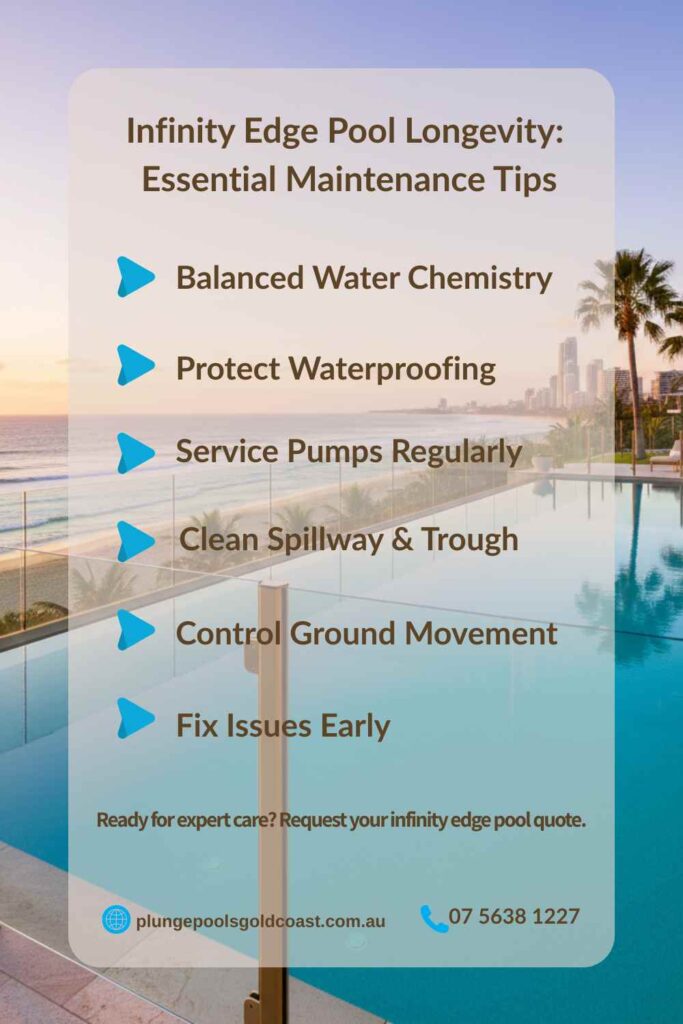
You can make a concrete infinity edge pool last longer by maintaining balanced water chemistry, protecting the waterproofing, servicing the pumps, cleaning the spillway and trough, and fixing small issues early. These simple steps help the pool stay strong for decades.
1. Maintain Perfect Water Chemistry
Balanced water chemistry protects the concrete shell, the waterproofing and the pump system. To extend lifespan, owners should:
- Keep pH stable to prevent surface wear
- Maintain the correct chlorine or salt level
- Check alkalinity and calcium hardness to avoid scaling
- Test water weekly for consistent results
When chemistry is balanced, every component ages more slowly and performs better.
2. Protect and Monitor the Waterproofing Layer
Waterproofing is the shield that stops water from damaging the structure. To keep it strong for decades, owners should:
- Inspect for cracks or seepage at least once a year
- Reseal surfaces every 7–10 years
- Avoid harsh impacts on the spillway or interior finish
- Repair small waterproofing issues immediately
Good waterproofing often determines whether a pool lasts 30 years—or 50+.
3. Service the Pumps and Overflow System Regularly
The edge pump is the core of the infinity effect, and long life depends on low strain and clean flow. Regular care includes:
- Annual pump inspections
- Cleaning baskets, strainers and filters
- Checking seals and motor noise
- Ensuring the flow rate is correctly calibrated
When pumps work smoothly, the whole hydraulic system stays in equilibrium.
4. Keep the Spillway and Catchment Trough Clean
The infinity edge depends on uninterrupted water flow. Clean surfaces help preserve both the look and the mechanics. Owners should:
- Remove debris from the trough
- Clear leaves and dirt from the weir lip
- Treat calcium buildup before it becomes hard to remove
- Check that water spills evenly across the edge
These simple tasks prevent strain on pumps and maintain the perfect visual line.
5. Manage Surrounding Ground Movement
Soil and structural movement can affect pool longevity. To prevent damage over time:
- Ensure proper drainage around the pool
- Avoid planting large trees too close together
- Monitor retaining walls and nearby slopes
- Fix early signs of movement immediately
Stable ground means a stable edge.
6. Repair Small Issues Early, Before They Spread
Infinity edge pools last the longest when small wear-and-tear is addressed quickly. Important early fixes include:
- Crack repairs
- Spillway tile replacement
- Top-up waterproofing patches
- Sensor or valve replacements
Early action prevents the kind of damage that becomes expensive later.
When Should You Call for a Professional Pool Inspection?
Call for an inspection if your pool’s waterline changes, pumps make new noises, or water levels drop quickly.
You should also get help if:
- The spillover sounds uneven or louder than usual
- You see cracks, damp spots, or chips in concrete
- Water use increases suddenly for no reason
A professional inspection can find small problems early, protecting your pool’s strength and saving you money in the long run.
Conclusion
After year one, your infinity edge pool becomes more predictable and easier to care for. The pumps settle, water use stabilises, and maintenance gets simpler, especially when your builder has designed the system well.
When you follow good habits, clean water, regular checks, and efficient equipment, your pool stays strong and stunning for many years. Alongside routine servicing, a guide to permits and compliance for infinity edge pools helps owners stay confident about barriers, setbacks, and safety obligations over time.
If you’d like expert help or a professional check, reach out to Plunge Pools Gold Coast. We’re here to guide you through every stage of care, so your infinity edge pool stays beautiful and stress-free for decades.
FAQs
1. How much water loss per week is normal for an infinity edge pool on the Gold Coast?
A normal infinity edge pool on the Gold Coast can lose 3 to 7 millimetres of water per day. This happens because the spillover exposes more water to the sun and wind, which increases natural evaporation.
2. How often should the pumps be serviced to keep an infinity edge pool running well?
Infinity edge pool pumps should be serviced once a year. A yearly check helps keep the flow steady, reduces strain on the motor and protects the system from early wear or sudden breakdowns.
3. What early signs show that the waterproofing in a concrete infinity edge pool needs attention?
The first signs of waterproofing issues are damp spots, constant top-ups or small cracks around edges. These early changes show moisture may be passing through the surface and should be checked quickly before damage grows.
4. Can I lower my infinity edge pool running costs without harming the system?
Yes, you can lower running costs by keeping filters clean, maintaining correct water balance and setting steady pump schedules. These small habits reduce energy use while keeping the infinity edge flow stable and safe.
5. What long-term repairs should I expect as my infinity edge pool gets older?
Long-term repairs may include pump servicing, waterproofing touch-ups or small fixes to concrete surfaces. These repairs are normal as the pool ages and help keep the structure strong and the flow even.