At Plunge Pools Gold Coast, we also design and build larger pools that suit your site, lifestyle, and budget. Our team helps homeowners understand the features of each type of pool so they can choose a design without stress. With years of experience across Gold Coast slopes, tight backyards, and ocean-facing blocks, we know how to match the best pool to your property.
In this article, you will learn the real key differences between infinity edge and standard skimmer pools, how each works, which sites they suit, the design options you can add, and how they compare in cost, style, and long-term care. A comparison table at the end will help you choose with confidence.
Infinity Edge Pools (Vanishing Edge Pools)
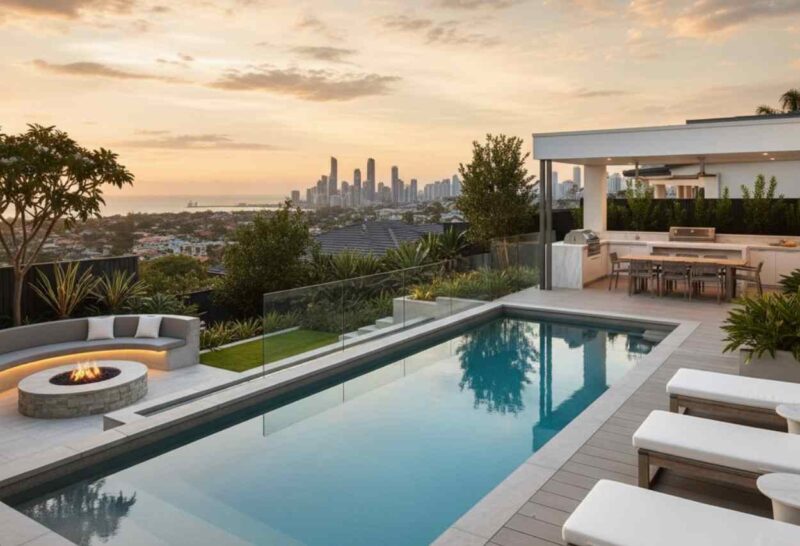
An infinity edge pool, sometimes called a negative edge or overflow pool, is designed with one or more lowered edges where water flows over into a hidden catch basin or trough. This creates the illusion of water blending into the surrounding landscape, ocean, or skyline.
How It Works
Water spills over the lowered edge into a concealed basin below. Pumps then recirculate the water back into the main pool. A proper system requires:
- A surge tank or trough to collect overflow
- Balancing systems to handle changes in water volume
- Precision levelling so the “vanishing” line stays even
Because these systems rely on precise hydraulics and levelling, understanding infinity edge pool design and costs helps homeowners avoid surprises during planning and construction.
Advantages
- Stunning, luxury visual impact
- Perfect for properties with scenic views
- Increases property appeal and perceived value
Beyond visual impact alone, the benefits of an infinity edge pools show how these designs enhance lifestyle, wellbeing, and property appeal.
Drawbacks
- Higher construction and equipment costs
- Increased water use
- Requires regular tuning, pump checks, and edge maintenance
Standard Skimmer Pools
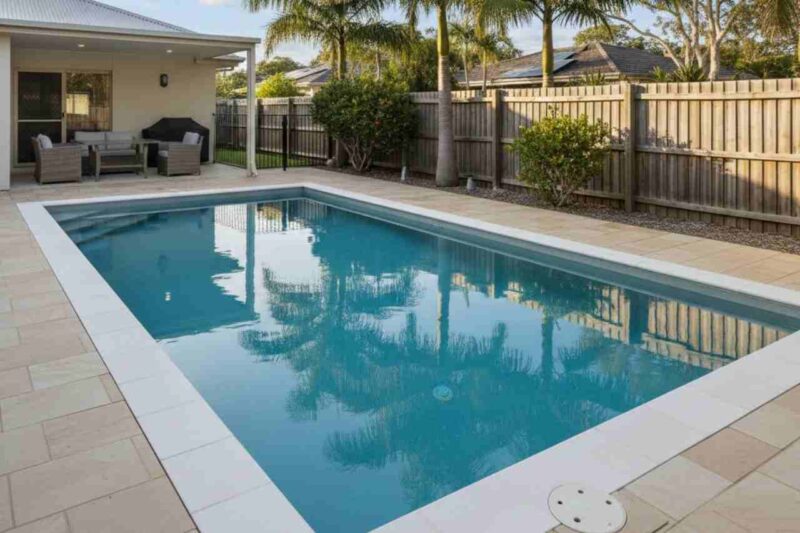
A skimmer pool uses skimmer boxes along the upper perimeter to draw surface water into the filtration system. Debris is trapped in baskets while clean water returns through jets.
How It Works
- Water stays below the coping
- Skimmers pull water and floating debris into baskets
- No trough, slope, or balancing tank required
Advantages
- Simple, cost-effective construction
- Easier maintenance and lower running costs
- Ideal for flat, urban or family-friendly blocks
Drawbacks
- No dramatic infinity-edge look
- Waterline can show dirt more easily
- Less visually impactful for view-driven properties
Feature Comparison
| Feature | Infinity Edge Pool | Standard Skimmer Pool |
|---|---|---|
| Visual Effect | Vanishing line merges with the horizon | Defined, visible edge |
| Best Site | Sloped or view-facing landscapes | Flat or suburban blocks |
| Cost to Build | Higher (special design + hydraulics) | Lower |
| Water System | Pumps + overflow trough | Skimmer boxes |
| Water Use | Higher (overflow loss) | Lower |
| Maintenance | More frequent inspections | Simple, low-cost care |
| Ideal For | Luxury homes, scenic views | Everyday family pools |
Quick Takeaway
Choose an Infinity Edge Pool if you want a showpiece design that integrates with your view, especially on sloped blocks.
Choose a Skimmer Pool for practicality, lower cost, and minimal maintenance on flat or enclosed yards.
How Infinity Edge Pools Work
Infinity edge pools achieve their visual effect through precise hydraulic and structural engineering. One wall, known as the weir wall, is lowered so water flows over it in a smooth sheet into a catch trough or surge tank below.
1. Core Components
Weir Wall
The lowered edge allows water to overflow. Even a few millimetres’ difference affects the quality of the sheet flow.
Catch Trough or Surge Tank
Hidden beneath the edge, it collects displaced water from swimmers, wind, or rainfall.
Recirculation Pump System
Special pumps return water from the trough to the pool, keeping the surface level constant.
2. Hydraulic Precision
A variation of only 2–3 mm can break the visual effect, so builders use laser levelling, surge capacity calculations, and balancing tanks.
3. Structural and Site Considerations
Infinity pools are often built on slopes or terraces where the edge visually aligns with a view. The lowered wall needs additional reinforcement.
4. Maintenance & Operation
These pools require:
- Regular pump and filter checks
- Surge tank cleaning
- Monitoring of edge flow and evaporation
5. Summary Definition
A vanishing edge pool is designed so water flows over a lowered wall into a hidden basin, creating the illusion that the pool extends into the surrounding view.
How Skimmer Pools Work
A skimmer pool works using built-in skimmer boxes just below the waterline. These draw in surface water along with debris. Water passes through a basket, goes to the filtration system, and returns clean through jets.
Key Components
- Skimmer Box: Pulls surface water and captures debris
- Weir Door: Allows debris in but prevents it from escaping
- Pump and Filter: Cleans water and circulates it
- Return Jets: Push filtered water back into the pool
Advantages
- Lower cost than infinity pools
- Simple construction
- Easy maintenance
- Reliable, long-lasting system with fewer parts
Maintenance Tips
- Clean skimmer baskets weekly
- Check water levels
- Inspect seals to prevent leaks
- Keep the surrounding areas clear of debris
Summary:
A skimmer pool is efficient, low-maintenance, and cost-effective. It is ideal for most residential blocks.
Best Pool by Site Type
A. Sloped or Horizon-Facing Sites — Best for Infinity Edge
Perfect for homes with views of water, hills, or valleys. Pools offer maximum impact here because the horizon line lines up with the weir wall.
These sites maximise the illusion because the edge visually connects to the horizon. For windy locations, deeper troughs and wind-smart planting prevent overspill.
B. Flat or Urban Lots — Best for Skimmer Pools
Ideal for compact yards or family homes.
Flat land allows stable water levels and simple skimmer operation without the complexity of edge hydraulics.
C. Hybrid Designs — Partial Infinity Edge
Best for sites with one strong view direction.
You get the aesthetic of an infinity edge on one side while reducing cost, hydraulics, and maintenance on the remaining sides.
Designing for Coastal and Wind Conditions
Gold Coast coastal sites face high winds, salt exposure, and humidity. These factors affect water balance, filtration, and edge performance.
1. Wind & Water Loss Management
- Deeper troughs
- Adjustable flow control
- Optional wind sensors
These reduce evaporation and prevent the sheet of water from breaking.
2. Salt & Structural Protection
- Marine-grade materials
- Sealed equipment housings
- Protective coatings
- Automated salinity management
3. Maintaining Visual Stability
- Slight lip adjustments
- Glass balustrades or plant screens
- Correct overflow angle for wind direction
4. Efficiency & Sustainability
- Water-level automation
- Rainwater harvesting
- Variable-speed pumps
These reduce water and energy consumption.
Design Features That Enhance Each Pool
A. Baja Shelves
Shallow lounging shelves work well in both pool types, but must be balanced carefully in infinity designs.
B. Spa Integration
Spas can be added to both systems. For infinity pools, the spillway should align with the main edge.
C. Lighting
Soft LED lighting highlights steps and edges. Infinity edges look best with gentle, linear lighting that enhances the sheet flow.
Cost and Maintenance Comparison
Infinity Edge Pools
- Higher build cost
- More pumps and hydraulics
- Infinity edge pools use more pool water because some is lost through constant overflow and evaporation
- More water loss
Skimmer Pools
- Lower cost
- Fewer parts
- Lower evaporation
Both pool types can last for decades with proper construction.
Choosing the Right Pool for You
When choosing a pool, think about your block, your view, and your long-term plans.
The type of pool you choose should match your site, lifestyle, and budget.
Choose an Infinity Edge Pool if:
- You have a slope or a view
- You want a high-end showpiece
Choose a Skimmer Pool if:
- You want affordable care
- You want a simple, long-lasting system
- The type of pool you choose should match your site
Conclusion
Both pool types can make your backyard amazing. The key is choosing the one that suits your site, lifestyle, and budget. Infinity pools create stunning views when done right. Skimmer pools are simple, affordable, and perfect for relaxed family living.
At Plunge Pools Gold Coast, we help you understand your options and design the right pool for your block. If you need expert advice, a custom plan, or a full pool build, please reach out to our team, and we will guide you through every step. We also offer support services to help you plan, design, or compare the best style for your home.
FAQs
1. What are the main drawbacks of an infinity edge pool?
The primary drawbacks of an infinity edge pool are higher costs, increased maintenance, and higher water usage. These pools need precise engineering, extra pumps, and a catch basin. They also lose more water in windy areas and require regular checks to keep the spill line smooth and safe.
2. How much water do infinity edge pools lose compared to skimmer pools?
Infinity edge pools lose more water than skimmer pools because water constantly flows over the weir wall. Wind, heat, and the open spill line increase evaporation. Skimmer pools hold water inside the edges, so they keep more water and need fewer top-ups over time.
3. Can a standard skimmer pool be upgraded to an infinity edge later?
A standard skimmer pool can be upgraded to an infinity edge, but it requires major structural changes. Builders must lower one wall, add a catch basin, install new hydraulics, and redesign levels. Because of this, most homeowners choose the infinity edge at the start of the build.
4. Does an infinity edge pool increase property value more than a skimmer pool?
An infinity edge pool increases property value more than a skimmer pool when the site has a strong view. The vanishing line creates a luxury feel that buyers love. On flat or private blocks, the value difference is smaller because the visual effect is less noticeable.
5. What engineering checks are needed before building an infinity edge pool?
The engineering checks needed before building an infinity edge pool include soil testing, slope assessment, weir wall height measurement, and hydraulic flow planning. Engineers also check wind exposure, drainage space, and structural load. These steps ensure the vanishing line works safely and the edge stays level.